In June 2024, United States Supreme Court issued a decision which may have a significant impact on closely held businesses with certain buy-sell agreements.
When two or more persons own a business, a buy-sell agreement serves a critical role in defining what happens to the business if an owner dies, becomes permanently disabled, retires or otherwise exits the business. In most cases, the agreement provides that the exiting owner's interest will be bought out, providing them (or their family) with cash for the value of the exiting owner's interest and the remaining owners retain control of the business. The agreement also prevents a stranger who the remaining owners do not know and who may not have any knowledge of or ability to contribute to the business, from stepping in as a new owner. This can happen if a spouse or children inherit a deceased owner's interest or when a retiring owner sells their interest to an unknown third party.
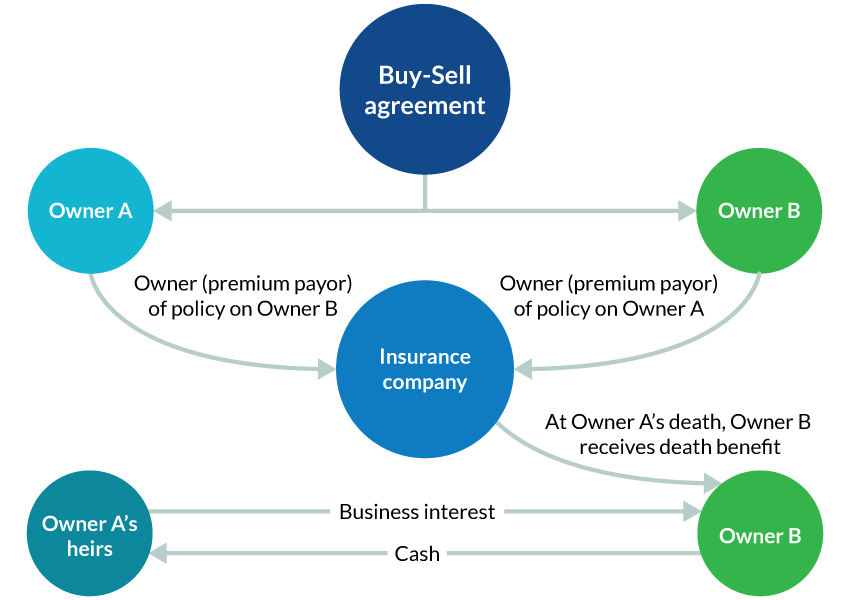
A buy-sell agreement can take different forms. A cross-purchase agreement involves an agreement between the owners which requires the remaining owners to purchase the interest of an exiting owner. Each of the remaining owners is financially responsible for the purchase of their pro rata share. If life insurance is used to fund the purchase after an owner's death, each owner will be required to purchase a policy on the life of every other owner, which can become burdensome when there are several owners.
In contrast, a redemption buy-sell agreement provides that the business is required to purchase the exiting owner's interest. Once the business purchases the interest, it effectively disappears as an outstanding ownership interest, leaving the remaining owners as the only owners and increasing their percentage ownership according to their pro rata interests.
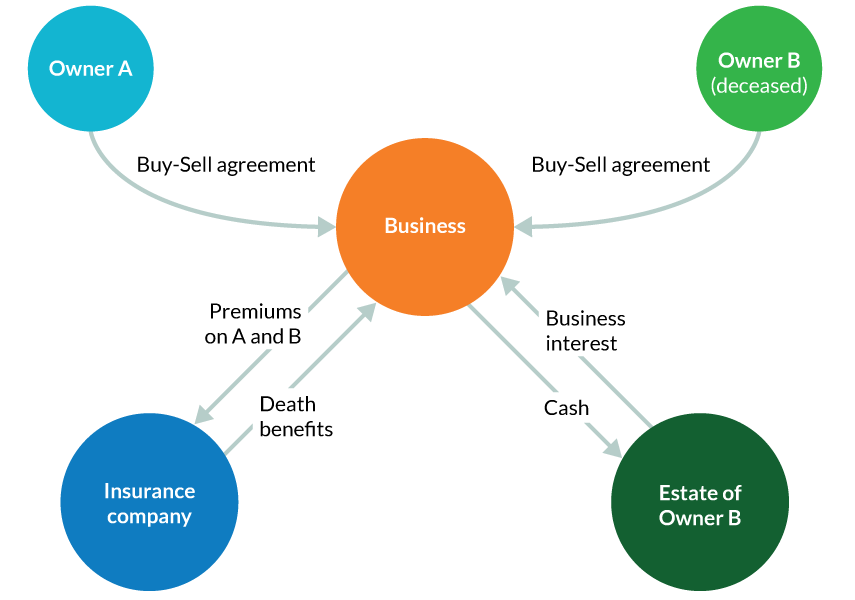
The case is question is Connelly v. United States (U.S., No. 23-146, Opinion 6/6/24). This case involved the valuation of a business originally owned by two brothers. The owners entered into a redemption – buy-sell agreement with the business that required the business to purchase the ownership interest of either brother if one of them died. The business purchased and owned life insurance on each brother, with the intention to use the proceeds to fund the purchase. One brother then died, the business purchased the shares from the deceased brother's estate, his family received cash and the other brother was left as the sole owner of the business – which is exactly the purpose of a buy-sell agreement. However, in determining the value of the business for estate tax purposes, the US Supreme Court held that the obligation of a business entity to buy a deceased owner's interest does not reduce the value of the entity or the value of the insurance proceeds received by the business to fund the buyout, contrary to a prior decision by the U.S. Court of Appeals in Estate of Blount v. Commissioner (428 F.3d 1338, 11th Cir. 2005) that many advisors considered settled law. This resulted in a substantial underpayment of estate tax by the deceased brother's estate, caused by the redemption agreement.
If you have a redemption buy-sell agreement in place for your business, you should consider reviewing this agreement with your legal advisor to determine whether the Connelly decision impacts you and your business. You may also want to consider a more comprehensive review of the structure and funding of your agreement. Is it optimally structured for your current business entity? If you have funded the agreement with life insurance, has the value of the company increased beyond the death benefits originally purchased? If new owners such as family members or even family trusts have been brought in, have they been included in the agreement? (Remember: If an owner transfers their interest to a trust, the agreement may need to be modified to trigger upon the trust's beneficiary's death, because the trust itself as the owner will not die) The Connelly decision may provide a good opportunity to double check that you and your business are adequately protected.
Buy-sell agreements are a critical part of succession planning for business owners. Your Mesirow Wealth Advisor can assist you with including a buy-sell as part of your holistic business and personal financial and estate plans.
Mesirow Wealth Management is a division of Mesirow Financial Investment Management, Inc., an SEC-registered investment advisor. Securities offered through Mesirow Financial, Inc., member FINRA, SIPC. Advisory Fees are described in Mesirow Financial Investment Management Inc.’s Part 2A of the Form ADV.