
When the United States wants to apply pressure abroad, it has many tools — from aircraft carriers to economic sanctions. Increasingly, however, Washington relies on the global financial system.
Financial sanctions — freezing central bank reserves, blocking banks from payment networks, and restricting access to the dollar — have become one of the most powerful instruments of modern statecraft. These measures can disrupt international payments, freeze financial assets, and effectively raise the cost of capital for the targeted country.
Because of the United States’ central role in global finance, sanctions have become an attractive foreign policy tool. They allow policymakers to impose meaningful economic pressure without deploying military force. But their growing use raises an important question: Do sanctions reinforce U.S. financial dominance — or gradually encourage the rest of the world to build alternatives?
Effective sanctions depend on the global dollar network — the institutions and financial infrastructure that support the worldwide use of the U.S. dollar.
Several features of the international monetary system amplify U.S. influence:
This dominance is especially important in clearing, the process of reconciling transactions between buyers and sellers that culminates in the transfer of funds.
Access to dollar clearing functions is like membership in an exclusive financial club. Losing that access can severely constrain a nation’s economy. Firms forced to operate outside the dollar system often face higher transaction costs, fewer financing options, and reduced access to global markets.
The power of the dollar network becomes most visible when access to it is restricted — a dynamic illustrated clearly by the financial sanctions imposed on Russia after its 2022 invasion of Ukraine.
When sanctions target the financial system directly, the effects typically appear in three places:
Russia experienced all three following its invasion of Ukraine.
Western governments froze roughly $300 billion in foreign exchange reserves belonging to the Central Bank of Russia. Freezing reserves is a temporary measure that prevents a central bank from selling, transferring, or using its assets while allowing it to retain formal ownership.
The United States also prohibited U.S. entities from transacting with the Central Bank of Russia and several major Russian financial institutions. Washington extended the reach of these restrictions by discouraging foreign firms outside U.S. jurisdiction from doing business with sanctioned banks.
Another major step involved limiting access to Society for Worldwide Interbank Financial Telecommunication (SWIFT), the global messaging system used by financial institutions to send payment instructions. Without reliable access to SWIFT, cross-border payments become slower, more complicated, and more costly.
The practical effect was clear: Russia increasingly had to settle energy exports in rubles, Chinese yuan, or other non-dollar currencies. Financial market indicators reflected these pressures. Currency basis spreads — the additional premium paid in swaps markets to balance supply and demand for currencies — widened significantly after sanctions were imposed.
Market infrastructure also deteriorated. In 2024, the Moscow Exchange suspended trading in euro- and dollar-denominated instruments. Market participants shifted to over-the-counter trading, where pricing transparency is lower and bid-ask spreads are typically wider. The Central Bank of Russia has also projected a structural liquidity deficit for 2026, meaning domestic banks may struggle to meet reserve requirements without borrowing from the central bank itself.
Yet despite these financial pressures, Russia continues the war — highlighting a central challenge of sanctions policy: economic costs do not always produce political change.
Financial systems rarely remain static. When sanctions close one channel, markets and governments begin searching for alternatives.
Russia began developing its own financial messaging system, the System for Transfer of Financial Messages, after sanctions in 2014 involving the annexation of Crimea. The system supports domestic and cross-border communication, although most activity remains domestic because foreign users risk secondary sanctions.
China has taken a similar approach with its Cross-Border Interbank Payment System (CIPS), which supports international transactions denominated in Chinese yuan; it also provides clearing and settlement services.
As of mid-2025, CIPS included more than 1,600 participants, with transaction volumes increasing sharply to over $24 trillion in 2024. China is also promoting yuan-denominated energy trading, an effort to diversify away from traditional petrodollar markets and reduce exposure to U.S. sanctions.
The shift is already visible in Russia-China trade. By late 2024 roughly 90 percent of bilateral trade settlement occurred in yuan or rubles. The CBR’s reserve holdings also show the impact of western sections: in early 2026, the Chinese currency and gold constitute most of the Russian central bank’s accessible international reserves.
Some workarounds are less conventional.
Gold — whether physical or digital — cannot easily be frozen or blocked within the banking system. Not surprisingly, central banks have increased gold purchases. By 2025, rising gold prices and sustained purchases pushed the value of central bank gold holdings above their holdings of U.S. Treasuries for the first time since the mid-1990s.
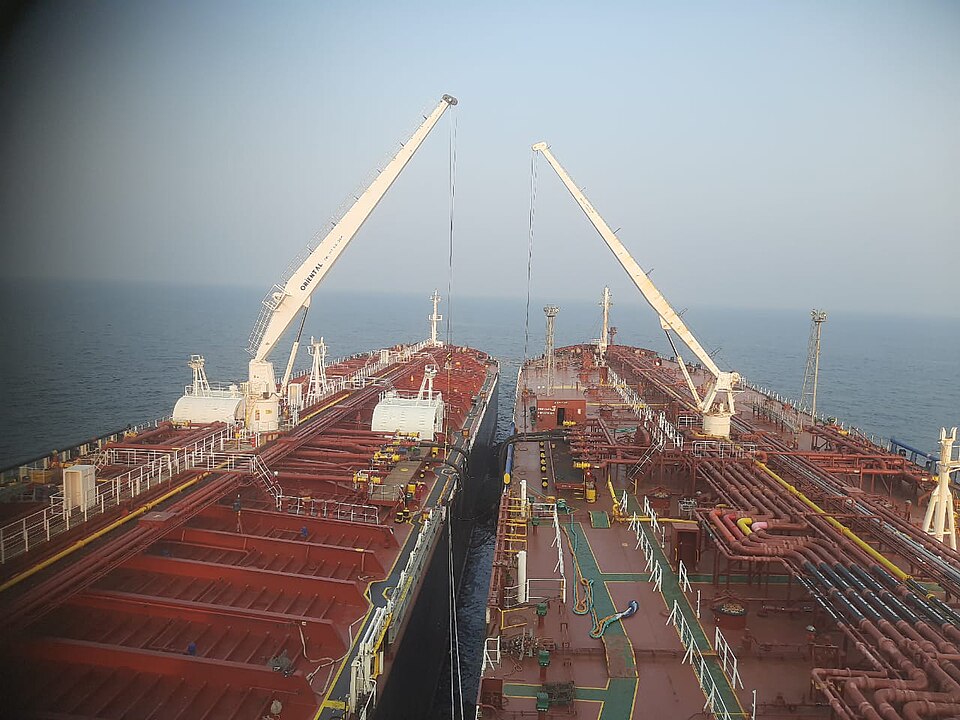
Sanctions evasion also occurs in the physical world. A growing “shadow fleet” of aging tankers conducts ship-to-ship oil transfers that obscure the origin of cargo. In January 2026 alone, roughly €68 million of Russian oil was transferred in this manner in European Union waters.
Small regional banks sometimes play a role as well. Institutions operating outside U.S. clearing systems may facilitate transactions that violate foreign sanctions but remain legal within domestic jurisdictions.
The freezing of Russia’s reserves has sparked a debate about the future of central bank reserve management.
Much of Russia’s frozen assets sit in Europe. Some policymakers argue that the interest earned on those assets should help finance Ukraine’s reconstruction, while others have proposed seizing the entire amount. The legal and political risks are substantial.
Central bank assets are generally considered sovereign property used for public purposes. Seizing them outright could provoke retaliation, including the confiscation of Western assets held abroad. It could also undermine investor confidence and weaken the euro.
These risks are encouraging many countries to reconsider how they hold reserves.
Some governments are experimenting with digital assets outside the traditional banking system. Iran, for example, has reportedly accumulated significant holdings of the stablecoin Tether.
China is exploring another path through central bank digital currency initiatives designed to facilitate cross-border payments outside traditional networks. Future systems such as the proposed BRICS Pay platform aim to allow international settlements in local currencies.
More traditional diversification is also underway, with some central banks increasing exposure to currencies such as the Canadian dollar, South Korean won, and Swiss franc.
China would like the renminbi to play a larger role in this diversification, but capital controls, limited investment opportunities, and concerns about government intervention continue to limit global demand for yuan reserves.
Financial sanctions offer clear advantages as a policy tool, but they also carry important risks.
In practice, sanctions create a dynamic contest of adaptation between the sanctioning country and the targeted nation.
Historically, sanctions took the form of naval blockades designed to restrict physical trade. Today’s versions are digital: account freezes, messaging bans, and infrastructure denial. When used carefully, financial sanctions can complement diplomacy and reinforce international norms. Used excessively, they may accelerate the development of alternative financial systems designed specifically to bypass them.
For countries concerned about sanctions, the strategy is clear: develop sanction-resistant payment systems and diversify reserve assets. For the United States, the challenge is different. Maintaining the dollar’s global role will likely require a careful balance — using sanctions judiciously while preserving the openness and stability that make the dollar system attractive in the first place.
In the long run, the durability of the dollar system may depend not only on America’s financial power, but also on how carefully — and how often — that power is used.
When sanctions target the financial system directly, the effects typically appear in three places: frozen reserves, disrupted payments, and rising financial friction.
Connect with us to learn more about Mesirow Currency solutions

Customized solutions to manage unrewarded currency risk in international portfolios.

Strategies that aim to profit from short and medium-term moves in the currency market.

Trading solution for asset managers and owners with focus on reducing transaction costs, improving transparency and enhancing efficiency.
The information contained herein should not be construed as a recommendation to purchase or sell any particular security or investment vehicle offered by Mesirow . The information included has been obtained from sources believed to be reliable, but is not necessarily complete and its accuracy cannot be guaranteed. Any opinions expressed are subject to change without notice. Mesirow Financial Investment Management, Inc. and its affiliated companies and/or individuals may, from time to time, own, have long or short positions in, or options on, or act as a market maker in, any securities discussed herein and may also perform financial advisory or investment banking services for those companies. It should not be assumed that any recommendations incorporated herein will be profitable or will equal past performance. Any stated performance results include the reinvestment of dividends and other earnings. Investment management services offered by Mesirow Financial Investment Management, Inc., an SEC-registered investment advisor.