
How the deportation of US undocumented workers is reported depends on perspective. US Immigration and Customs Enforcement reduces these events to online statistics: arrests, detentions, and removals. News coverage, by contrast, often focuses on the human dimension: following a parent separated from a family or a worker forced to leave a community after years of residence.
Far less attention is paid to an economic viewpoint: The capital flows that can accompany deportation campaigns. Changes in repatriation flows can destabilize the fragile finances of small Central American nations, disrupt currency markets, and measurably affect the US economy.
Every year, international migrant workers transfer hundreds of billions of dollars from developed economies to low- and middle-income nations. The World Economic Forum reported that money sent home by migrant workers was about $626 billion in 2022. Including funds sent to wealthier nations, repatriations that year reached almost $800 billion. Unrecorded flows boost the amount by an estimated fifty percent.
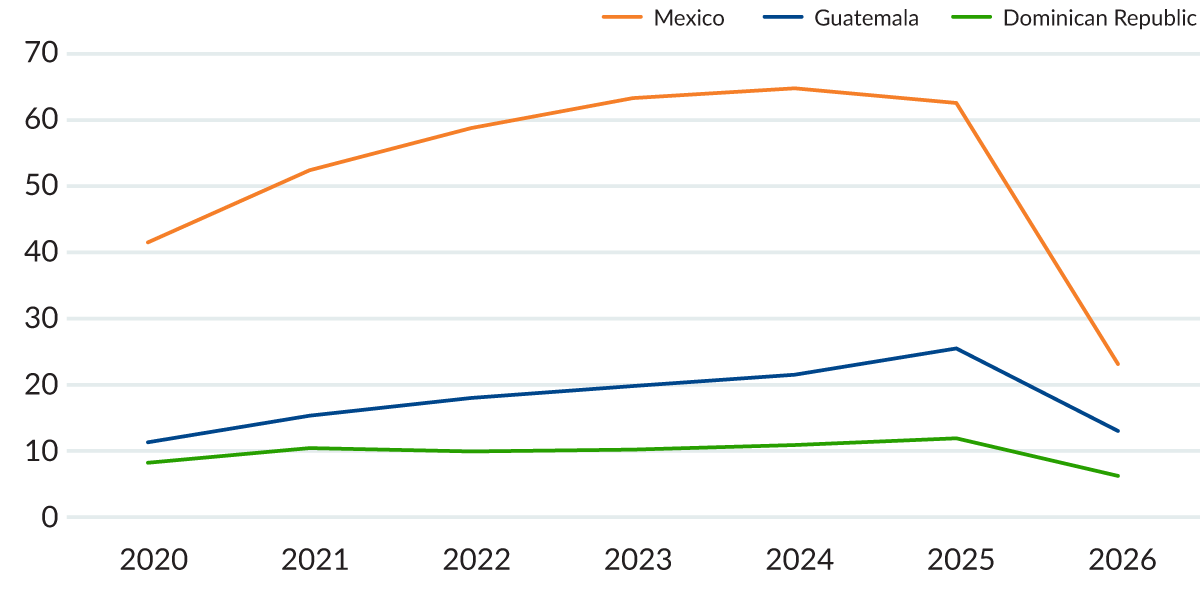
Historically, the epicenter of this flow has been the United States, which accounts for over 25% of all global remittance outflows. But US immigration policy is threatening this economic lifeline. The Department of Homeland Security reports roughly 605,000 formal deportations and an estimated 1.9 million voluntary departures since early 2025. The US expects 2026 deportations to exceed those of 2025.
Simultaneously, US Census Bureau data shows a historic reversal in demographics: net international migration to the US declined from a peak of 2.7 million in 2024 to 1.3 million in 2025 and is projected to plummet to 321,000 by the end of 2026.
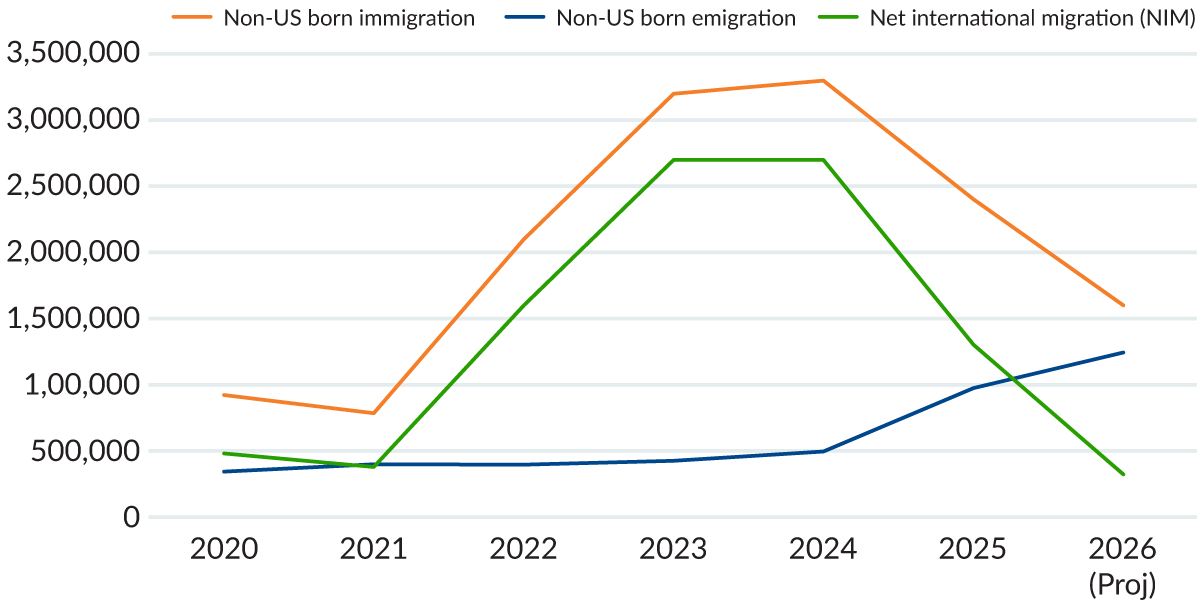
The logical conclusion: A rapid contraction in the US immigrant workforce would lead to a gradual, proportional drop in cross-border money transfers. But the data reveals a fascinating, highly volatile macroeconomic paradox.
In 2025, when the US administration began executing its border security and mass deportation agenda, data from the Inter-American Development Bank and central banks across Latin America recorded a surprise. Instead of crashing, remittances to Latin America and the Caribbean increased 7.3%, reaching a historic record of $173.7 billion. Excluding Mexico, some regions witnessed a 15% year-over-year spike in inbound cash.
Risk mitigation drove this "preemptive financial exit” phenomenon. When an undocumented worker faces an elevated risk of sudden deportation or asset freezing, their financial behavior changes. They fund extra transfers by working longer hours, liquidate their US assets, and draw down accounts in US banks or credit unions. They transfer everything to their home countries while they still have access to Western Union, MoneyGram, or digital apps.
According to data tracked by The Inter-American Dialogue, while the total number of unique individual senders began declining in late 2025, the principal amount per transaction rose by more than 20% in several Central American nations. The cash was sent home as a financial cushion for families bracing for an uncertain financial future with the return of their primary breadwinner.
This panic-induced capital flow, however, has limits. By mid-2026, the temporary surge has completely run its course. Hours worked reached limits, accounts drew down and most assets were transferred.
This shift in the foreign exchange spot markets caught some macro-observers off guard. As millions of workers simultaneously executed their preemptive financial exits, billions of dollars were abruptly converted from greenbacks into local currencies.
In the US-Mexico corridor, this unexpected capital flow created a supply-demand imbalance. US dollars added to short-term Mexican peso demand. Algorithmic trading desks and casual investors looked at the strengthening peso, misinterpreting the rally as a sign of underlying economic resilience, rising productivity, or a positive trade boom.
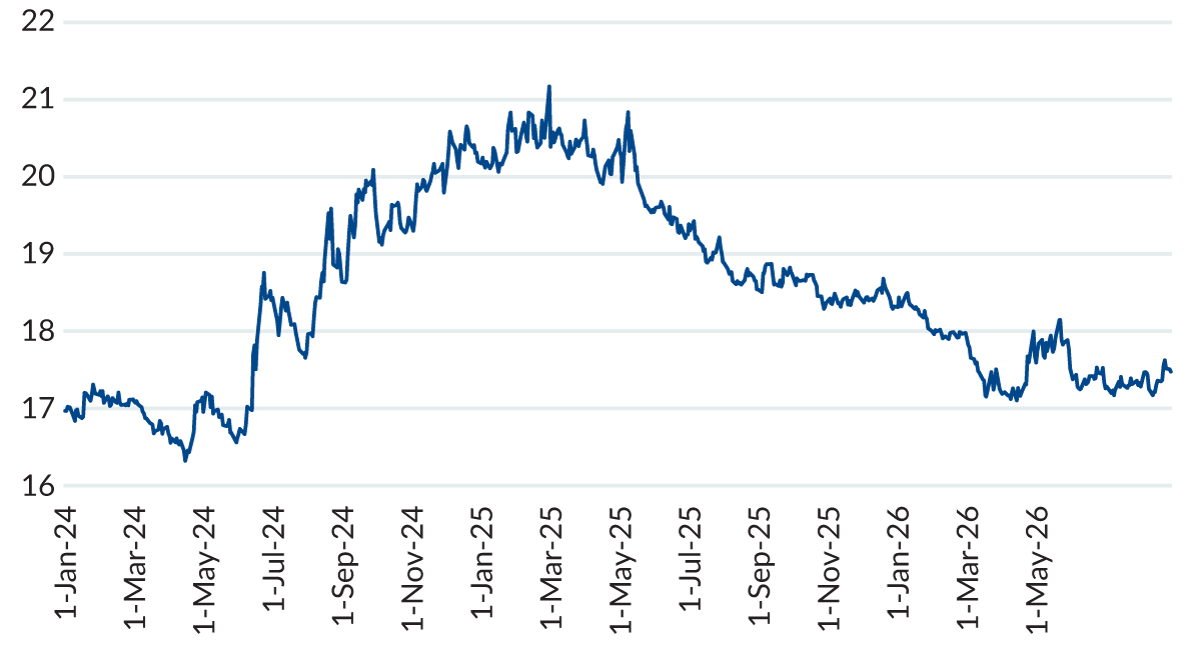
The conversion of remittances from dollars to pesos contributed to selling pressure on USD during 2025
However, this currency strength was a short-term event. The moment the panic premium cleared—meaning the undocumented savings reservoirs were fully drained and the physical headcount of workers tumbled—the spot demand for pesos moderated. Foreign exchange markets gradually repriced the underlying economic reality: fewer incoming dollars, weakened domestic retail consumption, and a permanently smaller migrant capital base.
For investors in multi-asset or emerging market portfolios, this structural shift in remittances from a torrent to a slow drip creates a series of secondary macro-economic risks:
The first phase of the story has already played out. Faced with uncertainty, migrant workers accelerated transfers, creating a temporary surge in remittances and unexpected pressure in regional currency markets. Those flows reflected precaution rather than prosperity.
The next phase may prove more consequential. As migrant populations shrink and extraordinary transfers fade, remittance-dependent economies must adjust to a slower, more persistent reduction in dollar inflows. That adjustment will influence domestic consumption, sovereign financing, and foreign exchange markets long after the headlines surrounding immigration policy have faded.
For currency investors, the lesson extends beyond Latin America. Foreign exchange markets often respond first to changes in trade, capital, and labor flows. It’s not because those forces are always visible, but because they quietly affect the supply and demand for money. Sometimes the most important currency stories begin not with central bank decisions but by the collective actions of ordinary people.
Faced with uncertainty, migrant workers accelerated transfers, creating a temporary surge in remittances and unexpected pressure in regional currency markets.
Connect with us to learn more about Mesirow Currency solutions

Customized solutions to manage unrewarded currency risk in international portfolios.

Strategies that aim to profit from short and medium-term moves in the currency market.

Trading solution for asset managers and owners with focus on reducing transaction costs, improving transparency and enhancing efficiency.
The information contained herein should not be construed as a recommendation to purchase or sell any particular security or investment vehicle offered by Mesirow . The information included has been obtained from sources believed to be reliable, but is not necessarily complete and its accuracy cannot be guaranteed. Any opinions expressed are subject to change without notice. Mesirow Financial Investment Management, Inc. and its affiliated companies and/or individuals may, from time to time, own, have long or short positions in, or options on, or act as a market maker in, any securities discussed herein and may also perform financial advisory or investment banking services for those companies. It should not be assumed that any recommendations incorporated herein will be profitable or will equal past performance. Any stated performance results include the reinvestment of dividends and other earnings. Investment management services offered by Mesirow Financial Investment Management, Inc., an SEC-registered investment advisor.